
Peridothas captivated humanity for millennia with its bright green to yellowish-green hues and natural glow. But thisgemstoneis special for another reason, it can reveal clues about where and how it formed.
From the fiery depths of the Earth's mantle to the cold expanse of outer space,peridotcarries a story that spans billions of years and crosses the boundaries of our planet.
What Is Peridot?
Peridotis the gem-quality variety of the mineral olivine, a magnesium-iron silicate with the chemical formula (Mg,Fe)₂SiO₄. It is one of the fewgemstonesthat occurs in essentially one color, a distinctive yellowish, olive, to lime green caused by iron that is an essential part of its structure rather than a trace impurity. This makesperidotan "idiochromatic" gem, meaning its color comes from its fundamental chemical composition rather than from external impurities.
The name "peridot" comes from the Arabic word "faridat," which means "gem". It has also been referred to as "chrysolite" from the German, and historically as "evening emerald" because it appears to lose its yellowish cast under artificial light.
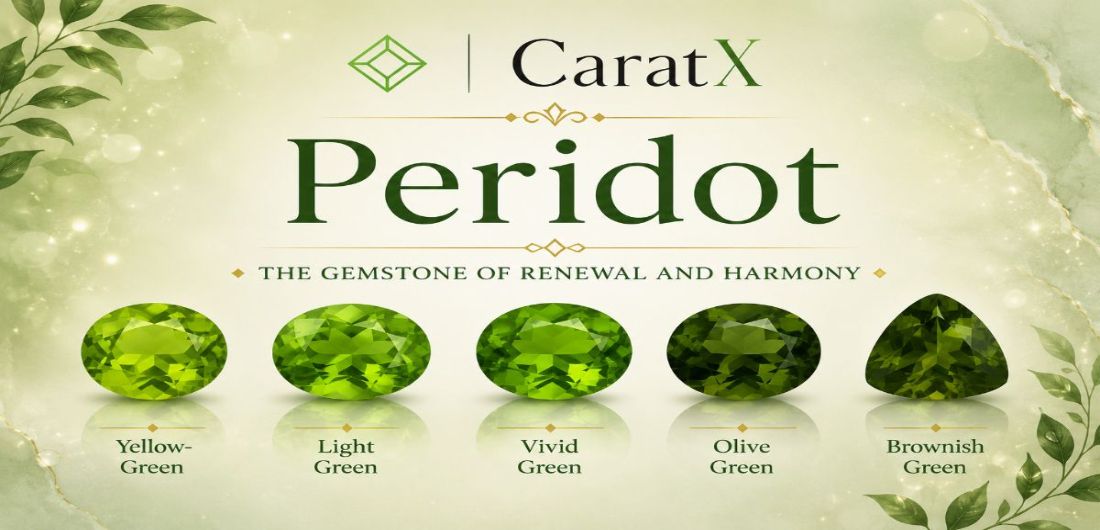
The Five Shades of Peridot -
Peridot'scolor spectrum is remarkably diverse for a gemstone that occurs in only one basic color. The variations depend primarily on the iron content within the crystal structure. Here are the five recognized shades:
Yellow-Green: A warm green shade with noticeable yellow tones. This is one of the most common varieties and is particularly associated with peridot from Arizona.
Light Green: A soft, fresh green with a gentle appearance. These stones tend to have lower iron content and a more delicate visual presence.
Vivid Green: A bright, lively green with strong color saturation. The most valued shade is a vivid, saturated lime green without brownish overtones. Pakistani peridot, in particular, tends to be rich, lime green and highly transparent.
Olive Green: A deeper green with subtle yellow or earthy tones. This classic peridot color is what many people envision when they think of the gemstone.
Brownish Green: A darker green mixed with warm brownish tones. This variety occurs when iron content is higher, pushing the color toward the brown spectrum.
The most covetedperidotcontains less than 15% iron, with trace amounts of chromium and nickel that can enhance the green color. Chromium, in particular, generates more vivid hues.
Formation:
Peridotis one of the few gemstones that can form deep inside the Earth's mantle. Olivine the mineral from which peridot is derived is astonishingly abundant in the upper mantle, making up an estimated 50 percent of Earth's upper mantle. The mineral crystallizes in the orthorhombic system and is known for strong double refraction, giving cut stones a slightly doubled, sparkling appearance.
The formation conditions forgem-quality peridotare remarkably specific. Studies of peridot from various sources indicate formation temperatures ranging from 813°C to 1087°C and pressures of 21–22 kbar. These extreme conditions equivalent to depths of approximately 70–80 kilometers within the Earth are necessary for the growth of large, transparent olivine crystals suitable for gem use.
Peridotreaches the surface through volcanic activity. When basaltic lavas erupt, they can carry chunks of mantle rock known as xenoliths to the surface. These xenoliths contain the olivine crystals that, when gem-quality, become peridot. The peridot-bearing nodules found in these volcanic rocks are considered a close analogue for the bulk composition of Earth's mantle, making them valuable not just as gemstones but as scientific specimens.
Unlike most other gems, olivine is highly susceptible to chemical weathering and does not survive very long at the surface in wet climates. This fact explains why gem-quality peridot deposits are largely restricted to areas with arid or semi-arid climates.
Extraterrestrial Peridot:
Perhaps the most exciting aspect of peridot is its extraterrestrial origin. Someperidotcrystals have come to Earth through meteorites, specifically a rare type of stony-iron meteorite known as pallasite. These meteorites contain olivine crystals embedded in a dark nickel-iron metal matrix.
Pallasites formed at the core-mantle boundary of differentiated asteroids in the early solar system around 4.5 billion years ago. When these asteroids broke apart, fragments eventually found their way to Earth as meteorites. The peridot or olivine extracted from pallasitic meteorites is the only extraterrestrial gem material known that is suitable for use in jewelry.
In a remarkable discovery, peridot was found in comet dust brought back from NASA's Stardust robotic space probe in 2005. This confirms that peridot truly is a gemstone with connections across our solar system.
Major Sources Around the World -
Pakistan -
Pakistan's Kohistan region, particularly the Supat Valley, produces some of the finest peridot ever found. These deposits, discovered in the 1990s, produce crystals that can exceed 100 carats and are prized for their rich, lime green color and exceptional transparency. Pakistani peridot is considered by many to be the finest in the world.
Arizona, USA -
The San Carlos Apache Reservation in Arizona is the most productive peridot deposit in the world, supplying an estimated 80 to 95 percent of the global peridot market. Peridot Mesa, a volcanic formation on the reservation, results from a single volcanic eruption and basalt flow thought to be of Late Tertiary or Quaternary age.
Theperidotis found in irregularly-shaped nodules within the basalt. Importantly, peridot on the reservation can only be mined by individual Native Americans or families from the San Carlos Reservation. Arizona peridot often has a more yellowish tone compared to peridot from other sources.
Myanmar (Burma) -
The Mogok region of Myanmar is one of the essential sources of high-quality peridot for the international gem trade. Peridot from the Pyaung-Gaung area possesses an attractive deep olive green color and can be found in large sizes exceeding 10 carats. An 83.25-carat peridot from Mogok with impressive color and clarity was recently examined by gemological laboratories.
China -
China has emerged as a significant peridot source, with deposits in Jilin Province's Yiqisong area being a recent discovery that continues to yield gem-quality material. Chinese peridot has been known since the 1980s, initially from Hebei Province and later from Jilin Province.
Other Sources -
Additional deposits include Afghanistan, Brazil, Kenya, Norway, South Africa, Sri Lanka, Tanzania, and Vietnam. The historic island of Zabargad (St. John's Island) in the Red Sea was the source for many of the world's finest peridots in ancient times.
Peridot's hardness of 6.5 to 7 on the Mohs scale makes it suitable for jewelry with reasonable care. It is durable enough for everyday wear but should be protected from scratches and hard blows that can cause fracture. The gemstone has fair to good toughness.
One of peridot's most distinctive optical properties is its strong double refraction. When you look closely through a cut peridot gem, you can see two of each pavilion facet. This "doubling" effect is a key identifying characteristic of peridot.
From Ancient Egypt to Today -
Peridot jewelrydates back as far as the second millennium BC. The ancient Egyptians mined peridot on the Red Sea island of Topazios, now known as St. John's Island or Zabargad. They called it the "gem of the sun" and believed it protected its owner from "terrors of the night," especially when set in gold.
Some historians believe that Cleopatra's famous emerald collection might actually have beenperidot. Archaeological evidence suggests that the gemstones she adorned herself with were peridots rather than emeralds as widely believed. Even Pharaoh Tutankhamen wore a pendant of the gemstone.
Through medieval times, people continued to confuse peridot with emerald. For centuries, the fabulous 200-carat gems adorning the shrine of the Three Holy Kings in Germany's Cologne Cathedral were believed to be emeralds, they are, in fact, peridots.
Peridot in Modern Jewelry -
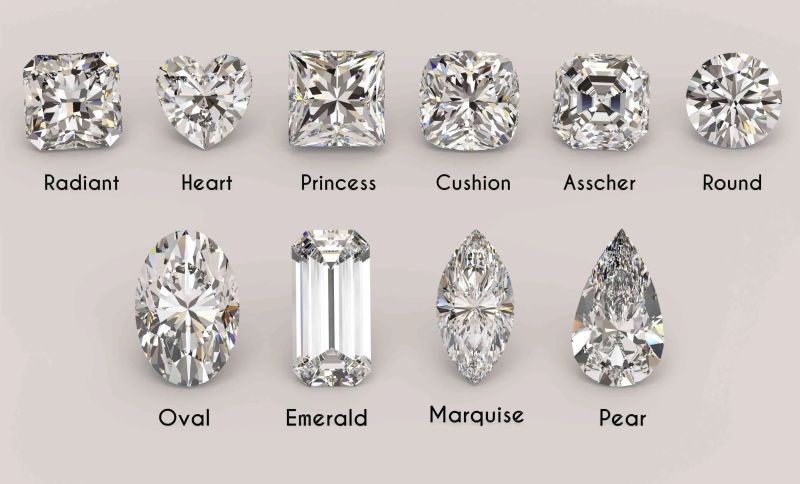
Peridotis the birthstone for August and the 15th anniversary gemstone. It is cut in a wide variety of styles, including ovals, emerald cuts, and cushions. Large crystals can yield cut gems exceeding 50 carats.
When shopping for peridot, quality factors to consider include:
Color: The best peridot is a pure grass green, though most peridot is yellowish-green. The most valued shade is a vivid, saturated lime green without brownish overtones.
Clarity: Most fine peridot is eye clean. Tiny black spots (often chromite crystals) might be visible with magnification.
Cut: Peridot's strong double refraction means that well-cut stones will display this effect beautifully.
Carat Weight: Larger stones are rarer and more valuable, though attractive smaller gems are available at all price points.
Recommended Reads from CaratX -
The Ultimate Guide to Diamond Inclusions– An in‑depth look at internal features of diamonds, including how green olivine (peridot) can appear as a colored mineral inclusion in certain diamonds – a fascinating link between peridot and diamond geology.
The United States: A Treasure Trove of Gemstones – A Complete Guide to Mining, History, and Buying– This comprehensive guide covers gemstone deposits across the U.S., with a detailed section on how peridot forms in volcanic bombs and why Arizona’s San Carlos reservation is one of the world’s most important peridot sources.
The Mohs Scale Decoded: The Ultimate Guide to Gemstone Hardness and Durability in Fine Jewelry– Understand the hardness and toughness of various gems; peridot (6.5–7 on Mohs) is discussed in the context of everyday wearability and care.
Peridot Diamond Halo Ring– View an actual peridot ring available onCaratX, showcasing a vibrant green peridot centre stone accented with diamonds, a perfect example of how peridot is used in fine jewellery.
Peridot Stud Earrings– Search “Peridot” onCaratXto discover our current inventory of peridot jewellery, including earrings, pendants, and rings in various shapes and sizes.
Sellers Register on CaratX– Sign up to start selling diamonds, gemstones, andjewelleryto B2B and B2C buyers across 18+ international countries.
CaratX Pricing & Plans– Learn about our marketplace fees, seller plans, and how to launch your products globally.
Caring for Your Peridot -
Peridot is durable enough for jewelry wear but should be worn with care. Here are essential care tips:
Clean peridot jewelry with warm, sudsy water and a soft microfiber cloth.
Avoid ultrasonic cleaners and steam cleaners, as they can damage the stone.
Protect peridot from rapid or uneven temperature changes, which can cause fracture.
Store peridot jewelry separately in a padded container to prevent scratching.
The Science Behind the Color -
Peridot's green color is unique among gemstones because it comes from iron that is an integral part of its mineral structure, rather than from impurities. The iron content can range from about 12% to 15% in gem-quality stones. When iron content exceeds 15%, the color becomes very dark or muddy.
Trace elements of nickel and chromium may modify the colors of some stones, with chromium generating more vivid green hues. Both metals are fairly abundant trace elements in the mantle rocks where most gem peridot grows.
Frequently Asked Questions
Is peridot the same as olivine?
Yes. Peridot is the gem-quality, transparent green variety of the common mineral olivine.
Why is peridot always green?
Its green color comes from iron that is an essential part of olivine's structure. Unlike many gems that get their color from trace impurities, peridot's color is intrinsic to its chemical composition.
Does peridot really come from space?
Some does. Peridot (olivine) is found in pallasite meteorites, remnants of our solar system's birth. Most terrestrial peridot originates deep in Earth's mantle.
Is peridot durable for everyday jewelry?
Yes, peridot is durable enough for everyday wear with a hardness of 6.5–7 on the Mohs scale. However, it should be worn with some care to avoid scratches and hard knocks.
What is the most valuable peridot color?
The most valued shade is a vivid, saturated lime green without brownish overtones. Pakistani peridot from the Supat Valley is particularly prized for its rich, lime green color.
How can I tell if my peridot is from space?
Extraterrestrial peridot (pallasitic peridot) is extremely rare and is identified by specialized gemological testing. GIA scientists distinguish it from terrestrial peridot through trace element analysis of vanadium, lithium, nickel, manganese, zinc, and cobalt.
Shop Natural Gemstones– Explore our collection of peridot and other fine gemstones at unbeatable prices.
Shop Natural Diamonds– Discover our curated selection of natural diamonds.
Sellers Register on CaratX– Start selling to B2B and B2C buyers in 18+ international countries.
Sell Jewelry Internationally– Expand your business through our CaratX seller plan.
CaratX Pricing– Learn more about our marketplace pricing and plans.