
Introduction: Nature's Most Colorful Gemstone
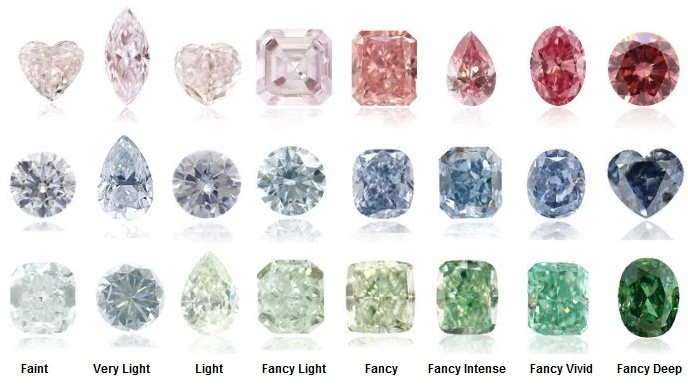
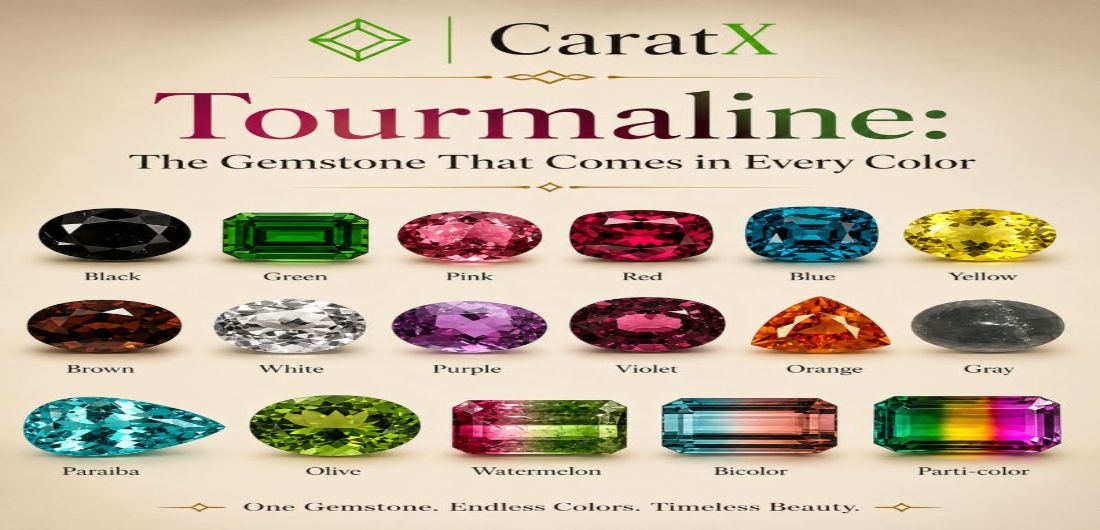
Tourmalinestands alone in the gemstone world as one of the most remarkably diverse minerals nature has ever created. With its unparalleled spectrum of colors ranging fromdelicate pinksand vibrant greens to deep blues, fiery reds, sunny yellows, and even blacktourmalinehas earned its reputation as the "Rainbow Gemstone."
What makes tourmaline truly extraordinary is that a single crystal can display multiple colors, creating breathtaking bi-color and tri-color specimens that are highly prized by collectors and jewelry enthusiasts alike. This remarkable gemstone is not merely a single mineral but a complex group of related minerals that share the same crystal structure while exhibiting dramatically different chemical compositions and therefore, different colors.
For those born in October,tourmalineserves as one of the month's two birthstones, alongside opal. Its exceptional durability, with a hardness rating of 7 to 7.5 on the Mohs scale, makes it suitable for everyday wear in rings, necklaces, earrings, and other fine jewelry.
AtCaratX, we offer an selection ofnatural tourmalinegemstones and tourmaline jewelry for discerning buyers worldwide. Whether you are a collector seeking a rare Paraibatourmalineor someone looking for the perfect October birthstone gift, our marketplace connects you with authentic, high-quality gemstones at competitive prices.
The Science Behind Tourmaline's Rainbow of Colors -
Tourmalineis not a single mineral but a group of closely related boron silicate minerals that share the same crystal structure but have different chemical compositions. The major tourmaline species include elbaite, liddicoatite, dravite, uvite, and schorl. Among these, elbaite offers the widest range of gem-quality colors and is responsible for most of the colorful tourmalines found in jewelry.
What Causes the Colors?
The spectacular array oftourmalinecolors is primarily caused by trace elements incorporated into its crystal structure during formation:
Iron (Fe) produces green and blue colors.
Manganese (Mn) creates pink and red hues.
Titanium (Ti) contributes to green and blue shades.
Copper (Cu) is responsible for the intense neon blue-green of Paraíba tourmaline.
Chromium (Cr) and vanadium (V) produce vibrant green colors.
Lithium (Li) combined with other elements creates a wide range of colors.
According to theGemological Institute of America (GIA), somepinkand yellow tourmalines may owe their hues to color centers caused by natural or laboratory-induced radiation.
The Role of Pegmatites -
Most gem-quality tourmaline forms in granitic pegmatites rare igneous rocks that contain large crystals and are rich in exotic elements. These pegmatites form from boron-rich fluids that crystallize slowly in underground pockets. As the chemical composition of these fluids changes during crystal growth, different colors are recorded in successive layers of the crystal.
This is why tourmaline crystals often display color zoning different colors in different parts of the same crystal. Brazilian pegmatites, in particular, have produced some of the most spectaculartourmalinespecimens in history.
Major Tourmaline Varieties -
Rubellite (Red to Pink Tourmaline) -
Rubellite is the name given to pink, red, purplish red, orangy red, or brownish red tourmaline. The most prized rubellite maintains its vibrant red color under both natural and artificial light. Manganese is the primary coloring agent.
Indicolite (Blue Tourmaline) -
Indicolite refers to dark violetish blue, blue, or greenish blue tourmaline. The blue color typically results from iron and titanium in the crystal structure.
Verdelite (Green Tourmaline) -
Green tourmaline, known as verdelite, ranges from pastel green to deep emerald-like shades. When colored primarily by vanadium and chromium, it may be called "chrome tourmaline."
Paraiba Tourmaline -
Discovered in 1982 in the state of Paraíba, Brazil, this is the most valuable tourmaline variety. Its neon blue-green color comes from trace amounts of copper, an element rarely found in tourmaline. Similar copper-bearing tourmalines have since been found in Nigeria and Mozambique.
Watermelon Tourmaline -
One of the most beloved varieties, watermelon tourmaline features a pink or red center surrounded by a green outer layer, exactly like a slice of watermelon. This remarkable color pattern forms when the chemical environment changes during crystal growth.
Dravite (Brown to Yellow Tourmaline) -
Named after the Drave District in Slovenia, dravite is rich in magnesium and ranges from brown to yellow.
Schorl (Black Tourmaline) -
Schorl is the most common tourmaline variety, comprising approximately 95% of all tourmaline. Rich in iron, it appears black to bluish-black.
Achroite (Colorless Tourmaline) -
Colorless tourmaline is extremely rare and highly prized by collectors.
Hardness and Wearability -
With a Mohs hardness of 7 to 7.5, tourmaline is durable enough for everydayjewelry, includingengagement rings. However, it is softer than sapphire (9) or diamond (10), so reasonable care should be taken to avoid scratches.
Tourmalinehas no cleavage and is considered to have fair to good toughness This means it resists breaking when struck, though it should still be protected from hard impacts.
Pyroelectric and Piezoelectric Properties -
One of tourmaline's most fascinating characteristics is its ability to become electrically charged when heated (pyroelectricity) or when pressure is applied (piezoelectricity This property was noted as early as the 18th century and has led to tourmaline's use in pressure gauges, oscillator plates, and other electrical equipment.
Where Tourmaline is Found -
Global Sources -
Tourmalineis mined on virtually every continent, with the most significant sources being:
Brazil — The world's largest producer of gem-quality tourmaline.
Afghanistan — Known for rubellite and mint tourmalines.
Mozambique — Important source of copper-bearing tourmaline.
Nigeria — Produces tourmaline in unusual colors and sizes.
Madagascar — Significant source of various tourmaline colors.
Pakistan — Known for fine tourmaline specimens.
United States — Maine and California have historic tourmaline mines.
Brazil:
Brazil has been the dominant source of gemtourmalinefor over a century. The state of Minas Gerais is particularly famous for its pegmatite deposits, producing a stunning variety of colors and sizes.
The discovery of Paraiba tourmaline in 1982 revolutionized the gemstone world The vivid neon blue-green stones from the Batalha Mine set new price records and remain among the most sought-after gemstones on Earth.
Afghanistan:
Afghanistan has been a source of gemstones for millennia, with lapis lazuli mined there since 6500 B.C. Tourmaline mining in Afghanistan's Nuristan province has been documented since the 1970s, with rubellites reportedly found there as early as the 14th and 16th centuries.
History and Lore of Tourmaline -
Ancient Egyptian Legend -
According to ancient Egyptian legend, tourmaline acquired its rainbow of colors during its long journey from the center of the Earth to the surface, passing over a rainbow and gathering all its colors along the way. The Egyptians believed tourmaline symbolized peace and safety and often inlaid it in amulets.
Ancient Greece and Rome -
Theophrastus, the ancient Greek naturalist (ca. 315 B.C.), may have described tourmaline in his bookOn Stones, the first known work about minerals. The Greeks and Romans wore tourmaline as a talisman, convinced of its protective powers.
The "Brazilian Emerald" Confusion -
In the 1500s, Spanish conquistadors in Brazil discovered green tourmaline crystals and mistook them for emeralds This confusion persisted until scientists recognized tourmaline as a distinct mineral species in the 1800s.
The Name "Tourmaline" -
The name "tourmaline" comes from the Sinhalese words "tura mali," which mean "stone of mixed colors." This name perfectly captures the gemstone's most distinctive characteristic, its remarkable color diversity.
Recommended Reads from CaratX -
Tourmaline: The Ultimate Guide to Earth's Rainbow Gemstone— The most comprehensive guide on tourmaline available on CaratX, covering scientific properties (pyroelectricity, trigonal structure), major varieties (Rubellite, Indicolite, Watermelon), and historical lore from ancient Egypt to modern Brazil.
A Comprehensive Guide to Black Gemstones— An in-depth exploration of Schorl (black tourmaline), which makes up over 95% of all tourmaline found in nature. Learn about its unique composition, durability, and protective metaphysical associations.
The 31‑Hue Wheel: The Ultimate Guide to Gemstone Colour Grading— Discover how gemologists use the precise hue-wheel system to grade vibrant stones like Paraíba tourmaline, distinguishing between greenish-blue (gB) and bluish-green (BG) tones to ensure accurate, universal color communication.
Gemstone Secrets Revealed: The Science & Scarcity Behind Nature's Masterpieces— Uncover the geological rarity of tourmaline, particularly why copper-bearing Paraíba tourmaline yields only grams of gemstone per ton of host rock, making it more expensive per carat than many diamonds.
The Captivating World of Color-Change Gemstones— A fascinating read on how certain elbaite tourmalines exhibit subtle color shifts under different light sources, and why true "color-change" is strictly defined versus simple "color-shift."
The Ultimate Compendium on Birthstones— Your definitive guide to October's dual birthstones—Tourmaline and Opal. Includes historical origins, symbolic meanings, and expert buying tips for selecting the perfect birthstone jewelry.
The Complete Guide to Gemstone Verification— Essential reading for every buyer. Learn professional techniques to verify natural tourmaline authenticity, identify common treatments (heating, irradiation, fracture-filling), and distinguish it from imitations using 10x loupe inspection
Tourmaline as a Birthstone -
October's Dual Birthstones -
Tourmalineshares the honor of being October's birthstone with opal This dual designation offers those born in October a choice between two remarkably different but equally beautiful gemstones.
Wedding Anniversaries -
Tourmalineis the traditional gemstone for the **8th wedding anniversary.
Buying Tourmaline: Quality Factors
Color -
Color is the most important quality factor for tourmaline. The most valuable colors include:
Neon blue-green (Paraíba tourmaline
Vivid red (rubellite
Intense green (chrome tourmaline
Vibrant pink
Clarity -
Pink to red tourmalinesoften contain more visible inclusions than green to blue varieties While eye-clean stones are most valuable, some inclusions are acceptable and even expected in certain varieties.
Cut -
Tourmalinecrystals are typically long and slender, leading cutters to create elongated shapes. Skilled cutting can maximize color saturation and minimize the appearance of inclusions.
Carat Weight -
Tourmaline comes in all sizes, from small melee stones to large crystals weighing hundreds of carats. Larger stones of exceptional quality command premium prices.
What to Avoid -
Ultrasonic cleaners — Not recommended for tourmaline
Steam cleaners — Can cause fracturing
High heat — May alter color
Harsh chemicals — Can damage the stone
Abrasive materials — May scratch the surface
Tourmaline Treatments -
Common Treatments
Heating — Green and blue tourmalines are frequently heat-treated.
Irradiation — Colorless or pale gems can be irradiated to enhance color.
Fracture filling — Some cat's-eye tourmalines may be treated with acid and filled.
All treatments should be fully disclosed to buyers.
Frequently Asked Questions -
Q: Is tourmaline a good choice for an engagement ring?
A: Yes! With a Mohs hardness of 7 to 7.5, tourmaline is durable enough for everyday wear. However, it is softer than sapphire or diamond, so it should be protected from hard impacts and abrasive wear.
Q: What is the rarest tourmaline color?
A: Colorless tourmaline (achroite) is extremely rare Paraíba tourmaline's neon blue-green is also exceptionally rare and highly valuable
Q: How can I tell if my tourmaline is real?
A: Look for tourmaline's characteristic trigonal crystal form, strong dichroism (appearing darker down the length of the crystal), and lengthwise striations A professional gemological laboratory can provide definitive identification.
Q: Why is Paraíba tourmaline so expensive?
A: Paraíba tourmaline's vibrant neon blue-green color comes from trace amounts of copper, which is exceptionally rare in tourmaline. The original Brazilian mines are largely depleted, and stones over 1 carat are extremely rare.
Q: Can tourmaline change color?
A: Some tourmalines show color change under different lighting conditions. Rubellite should maintain its red color in both natural and artificial light. Some pink tourmalines may appear less vibrant under incandescent light.
Q: What is the difference between tourmaline and opal?
A: Both are October birthstones Tourmaline is a boron silicate mineral with a hardness of 7-7.5 while opal is a hydrated silica with a hardness of 5.5-6.5. Tourmaline displays a wide range of solid colors, while opal is known for its play-of-color iridescence.
Q: How should I store my tourmaline jewelry?
A: Store tourmaline pieces separately in soft cloth pouches or padded compartments to prevent scratching. Avoid exposure to high heat and sudden temperature changes.
Conclusion -
Tourmalinetruly deserves its title as the "Rainbow Gemstone." With its unparalleled color diversity, excellent durability, fascinating history, and global availability, it offers something for every gemstone lover. Whether you are drawn to the electric blues of Paraíba, the romantic pinks of rubellite, or the whimsical charm of watermelon tourmaline, this remarkable gemstone never fails to captivate.
AtCaratX, we are proud to offer a curated selection ofnatural tourmalinegemstones and tourmaline jewelry. Our marketplace connects buyers with trusted sellers from around the world, ensuring authenticity, quality, and competitive pricing.
Shop Natural Diamonds— Explore our collection of certified natural diamonds.
Shop Gemstones— Discover a wide range of colored gemstones at unbeatable prices.
Sell on CaratX— Register as a seller and start selling to buyers in 18+ international countries.
Seller Plans— Learn about our seller plans and start selling jewelry internationally.
Pricing Information— Detailed information about CaratX pricing and plans.